
Why Glass Needs It
Visibility where it matters most
Your windscreen and windows are constantly exposed to rain, road spray, traffic film, insects and environmental contamination. When water spreads across untreated glass, it can obscure your view and make driving in wet conditions more demanding.
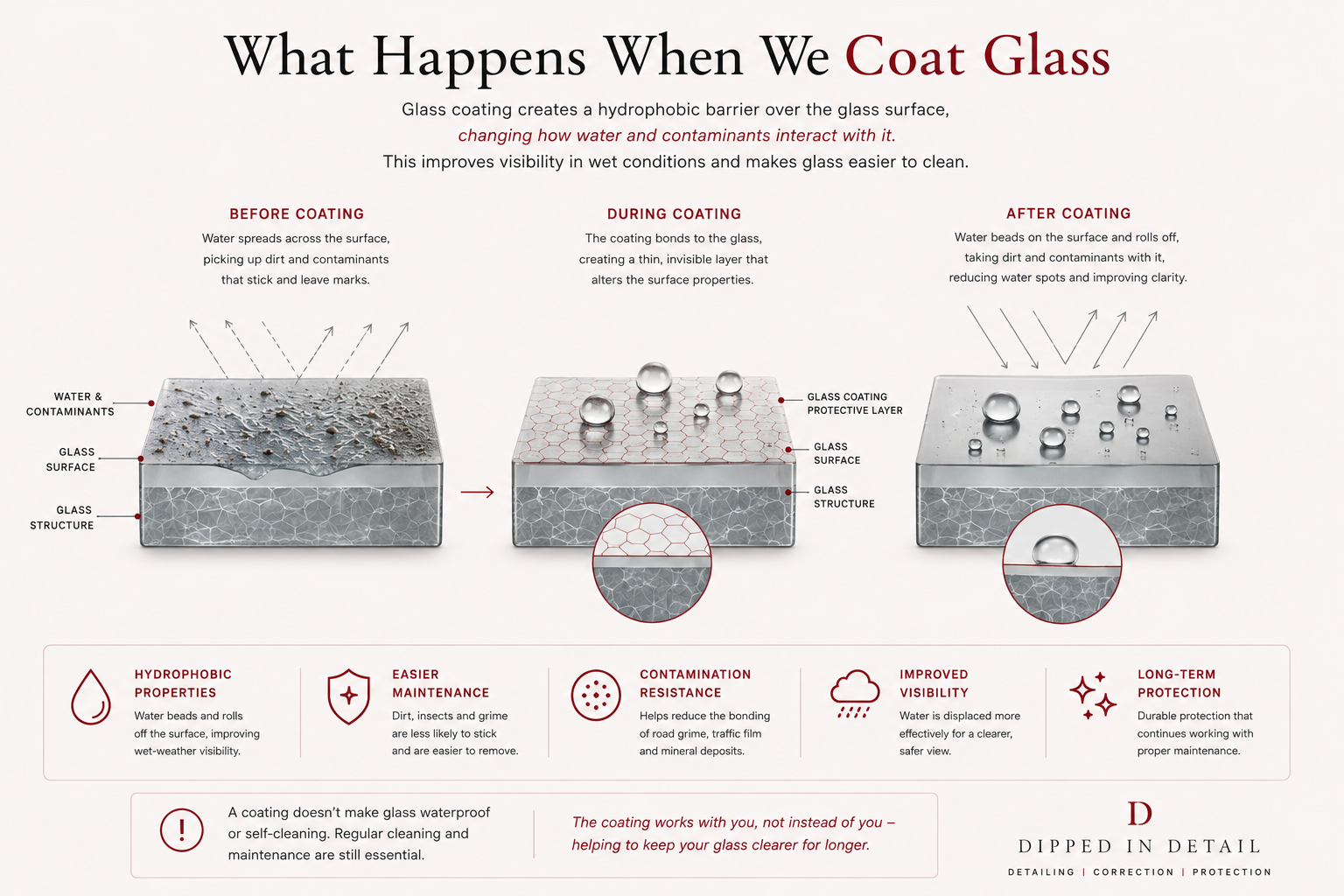
A glass coating creates a hydrophobic barrier over the glass surface, changing how water and contaminants interact with it for clearer visibility and easier maintenance.
Glass coating doesn't make glass waterproof or self-cleaning. What it does is change the surface characteristics so water beads up and is more easily displaced, helping you see more clearly when it matters.
What It Is
What is glass coating?
Glass coating is a specialist protective treatment applied to the exterior surface of automotive glass. Once cured, it forms a thin, transparent layer that bonds to the glass and alters its surface properties.
Unlike traditional rain repellents that sit on top of the glass, professional glass coatings are designed to bond more durably, providing longer-lasting water-repellent behaviour and making routine cleaning more effective.
The Science
The science behind glass coating
At a microscopic level, glass has a surface with imperfections and chemical groups that allow water to interact with it. On untreated glass, water can spread across the surface relatively easily.
A glass coating changes the surface energy and wettability of the glass. In simple terms:
- Untreated glass — water spreads across the surface.
- Coated glass — water forms droplets and is more easily displaced.
This is known as hydrophobicity. The coating creates a surface that water has less tendency to spread across, producing the characteristic beading effect. When the vehicle is moving, airflow can then help carry these droplets across the windscreen and away from the driver's field of vision.
Hydrophobic Properties
Hydrophobic, not waterproof
Hydrophobic means water-repelling. On a coated glass surface, water tends to form rounder droplets with a higher contact angle rather than spreading into a continuous film. These droplets are more easily moved by airflow, gravity or wipers.
This is particularly noticeable at speed, where water can be carried off the windscreen more readily. In lighter rain you may find you need less wiper use, although wipers remain essential for safe driving in heavier conditions.
Benefits & Protection
What glass coating helps with
Hydrophobic Properties
Water beads and rolls off the surface, improving wet-weather visibility and helping rain clear more quickly from the windscreen.
Easier Maintenance
Dirt, road grime, insects and contaminants are easier to remove because they are less likely to bond strongly to the coated surface.
Contamination Resistance
Helps reduce the bonding of road grime, traffic film and mineral deposits, keeping glass cleaner for longer between washes.
Improved Visibility
Water is displaced more easily, helping to maintain a clearer view in wet conditions and reducing the need for constant wiper use.
Long-Term Protection
Durable protection that continues working with proper maintenance, providing a consistent barrier over the glass surface.
Limitations
What glass coating does not do
Glass coating is a protective treatment, not a repair or replacement for safe driving practices. It will not:
- Make glass completely waterproof
- Make glass self-cleaning
- Remove scratches or wiper marks
- Replace the need for wipers
- Prevent all contamination from sticking
- Fix chips, cracks or physical damage
Aftercare
Keeping coated glass performing
Even coated glass needs regular cleaning. Dirt, traffic film and environmental contamination can build up on the surface over time and reduce the beading effect.
Use a suitable automotive glass cleaner and avoid abrasive products or aggressive scrubbing. If you notice water behaviour declining, a professional decontamination and clean can often restore the surface characteristics without needing to recoat.
We can maintain your glass coating for you as part of a regular detailing schedule, helping to preserve clarity and water-repellent performance.
Misconceptions
Glass coating myths, answered
“Glass coating makes my windscreen waterproof.”
No. A coating is water-repellent, not waterproof. Water still reaches the glass, but it behaves differently and is easier to clear.
“Coated glass is self-cleaning.”
No. Contamination still builds up. The coating makes cleaning easier, but regular washing and maintenance are still essential.
“I won't need my wipers anymore.”
Wipers are still necessary. At higher speeds water may disperse more easily, but wipers remain important for safety in heavy rain.
“If water stops beading, the coating has failed.”
Not necessarily. The surface may be clogged with contamination. A proper glass decontamination and clean can often restore beading.
“Glass coating fixes scratches or chips.”
No. Coating is a protective treatment, not a repair. Scratches, chips and wiper marks need to be addressed separately before coating.
FAQs
Glass coating questions
How long does glass coating last?▼
Lifespan depends on the product, exposure to the elements, wiper use and maintenance. Many professional glass coatings are designed to last from several months up to a couple of years with proper care.
Can glass coating be applied to side and rear windows?▼
Yes. Coating can be applied to most exterior automotive glass, including side windows, rear screens and mirrors, depending on the product and condition.
Does glass coating improve safety?▼
It can help improve wet-weather visibility by making water bead and disperse more readily. However, it is not a substitute for careful driving, good wipers and regular screen wash.
Can you coat glass that has wiper marks?▼
Minor marks may be polished out during preparation, but deeper scratches or damaged glass should be assessed first. Coating will not hide or repair physical damage.
How do I maintain coated glass?▼
Use a suitable glass cleaner, avoid abrasive products, and keep the screen free from heavy contamination. Regular cleaning helps preserve hydrophobic behaviour.
Will glass coating prevent water spots?▼
It can reduce water spotting by helping water roll away more quickly, but mineral deposits can still form if water is left to dry on the surface.
Can glass coating be applied over a windscreen rain repellent?▼
The glass should be thoroughly cleaned and stripped of old products before application so the coating can bond properly to the surface.
Is glass coating worth it?▼
For drivers who frequently travel in wet conditions, the improved water behaviour and easier cleaning can make maintenance noticeably more convenient.
Ready to book?
Protect your glass the right way
Book your glass coating service through our customer portal and enjoy clearer visibility and easier maintenance.