
Why Fabric Needs It
The hardest-working surfaces in your interior
Your vehicle's carpets, floor mats and fabric upholstery are exposed to constant contact with shoes, clothing, food, drinks, dirt and moisture. Unlike hard surfaces, fabric fibres can absorb liquids and hold onto contamination, allowing spills to penetrate deeper into the material.
A professional fabric coating creates a protective, invisible layer around the individual fibres, helping reduce the ability of liquids and contamination to penetrate. This makes spills easier to deal with and helps keep the interior cleaner for longer.
What It Is
What is fabric coating?
Fabric coating is a specialist protective treatment designed to bond to the fibres of automotive textiles. Once applied and cured, the coating forms a thin, transparent protective layer around the fibres without significantly changing their original appearance, colour or texture.
The aim is not to make the fabric permanently stain-proof. Instead, the coating gives you more time to react when a spill or contamination occurs, while making the material easier to maintain.
In simple terms: untreated fabric allows liquid to penetrate the fibres, while coated fabric helps liquid sit on the surface so it can be blotted away.
The Science
The science behind fabric coating
Fabric is made up of thousands of individual fibres with spaces between them. When liquid reaches untreated fabric, surface tension and capillary action can cause the liquid to spread between and into these fibres. This is why a drink spilled onto an untreated seat or carpet can quickly disappear into the material.
A fabric coating modifies the surface of those fibres, making them less receptive to water and other liquids. The result is increased water and liquid repellency. Instead of immediately soaking into the fabric, a liquid can form droplets on the surface.
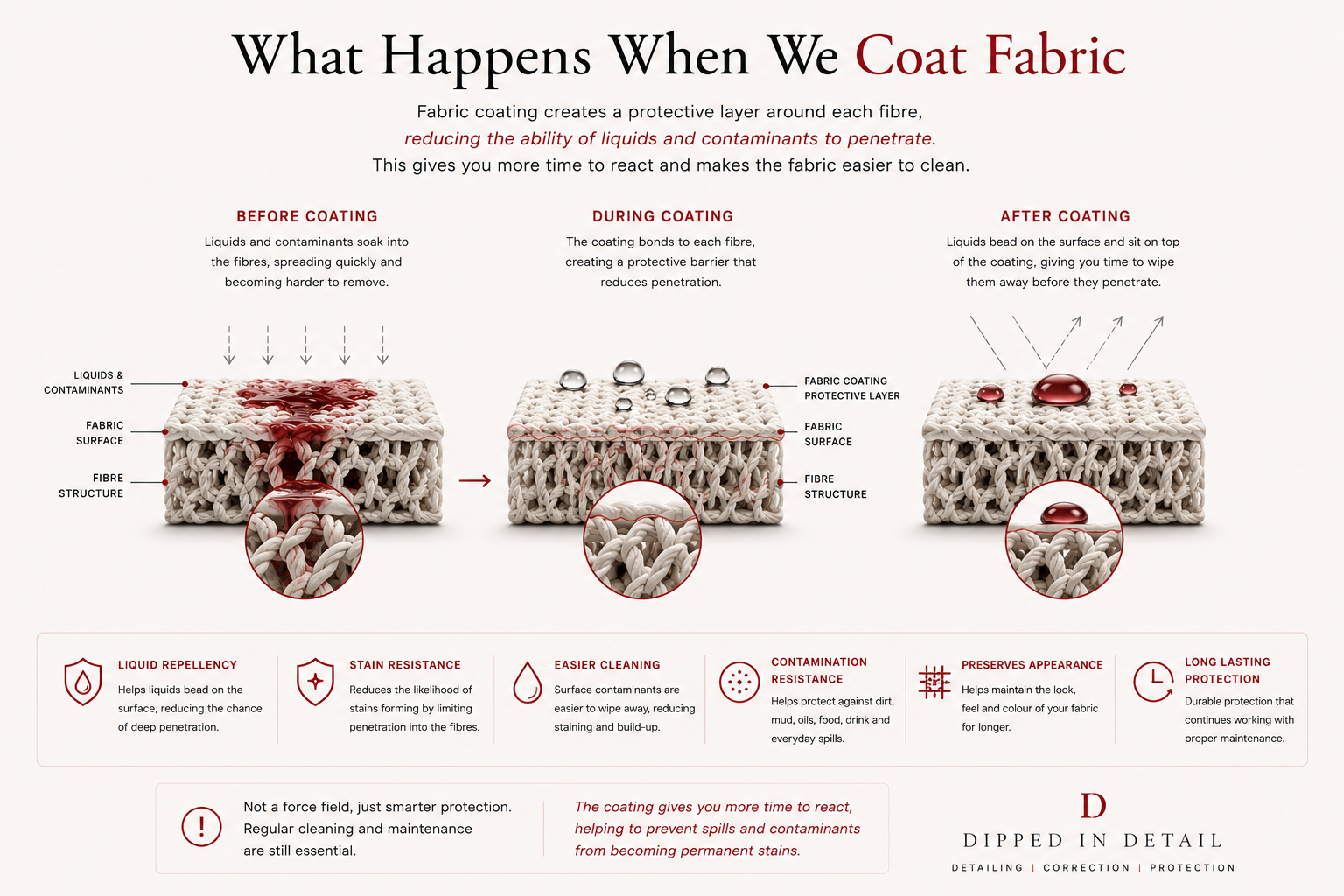
Fabric fibres → protective coating → liquid droplet. The coating gives contamination less opportunity to penetrate immediately and makes the fabric easier to clean.
Everyday Exposure
Why does fabric need protection?
Your vehicle's fabric is exposed to contamination every day. Once contamination penetrates into fabric, it can become considerably more difficult to remove. Fabric coating provides an additional barrier against everyday spills and contamination, helping preserve the appearance and condition of the interior.
- Water and rain
- Coffee and soft drinks
- Food and grease
- Mud and dirt
- Wet shoes
- Body oils
- Pet contamination
- General dust and debris
- Clothing dye transfer
Benefits & Properties
What fabric coating helps with
Liquid Repellency
The coating helps liquids form droplets on the surface rather than immediately soaking into the fabric.
Stain Resistance
By reducing penetration, the coating can help prevent spills from becoming deeply embedded stains.
Easier Maintenance
Contamination that remains closer to the surface is generally easier to clean than contamination that has penetrated deeply into the fibres.
Contamination Resistance
The protective treatment helps reduce the ability of everyday contamination to bond directly with the fabric fibres.
Preservation
By reducing repeated exposure to spills and contamination, fabric coating can help preserve the appearance of the interior over time.
Invisible Protection
A properly applied coating is designed to protect without leaving the fabric looking artificially glossy, stiff or heavily treated.
Limitations
What fabric coating does not do
Fabric coating is protection, not a force field. The effectiveness of the coating also depends on the type of liquid, the amount spilled and how quickly the spill is dealt with.
- Make fabric completely stain-proof
- Prevent every liquid from penetrating
- Make fabric waterproof
- Remove existing stains
- Repair damaged or worn fabric
- Prevent physical wear
- Stop all dye transfer
- Replace regular interior cleaning
Spill Response
Why you should deal with spills quickly
Fabric coating gives you time — not immunity. If a drink is spilled onto coated fabric, the best response is to act quickly. Rather than rubbing the spill deeper into the material, the goal is to lift it away.
Blot
Use a clean cloth or towel to absorb as much liquid as possible without rubbing.
Lift
Work from the outside in to lift the spill away from the fabric surface.
Clean
Use a suitable automotive fabric cleaner if needed, following the product guidance.
The longer a contaminant remains on the surface, the greater the opportunity it has to penetrate. This is particularly important with substances such as coffee, fizzy drinks, coloured liquids and oily contamination.
Aftercare
Keeping coated fabric at its best
A coated fabric interior still needs regular maintenance. Over time, dirt and oils can build up on top of the coating. This can reduce its water-repellent behaviour and make the coating appear less effective. This does not necessarily mean the coating has failed — a proper fabric cleaning and decontamination can often restore the surface and its performance.
- Deal with spills as soon as possible
- Blot spills rather than aggressively rubbing them
- Vacuum regularly
- Clean fabric using suitable automotive products
- Avoid harsh household chemicals
- Avoid excessive scrubbing
- Keep the interior reasonably dry and ventilated
- Follow the recommended maintenance process
Misconceptions
Fabric coating myths, answered
“Fabric coating makes my upholstery completely stain-proof.”
No. The coating provides additional protection and gives you more time to react, but spills can still stain if left too long.
“Coated fabric is waterproof.”
No. Fabric coating improves water and liquid repellency, but it does not make fabric waterproof.
“I don't need to clean coated fabric.”
No. Regular cleaning and maintenance are still essential. The coating makes maintenance easier, not unnecessary.
“Fabric coating removes existing stains.”
No. Existing stains should be addressed before coating. The coating protects against future contamination, not past damage.
“If water stops beading, the coating has failed.”
Not necessarily. Dirt and oils can build up on top of the coating and reduce beading. A proper fabric clean and decontamination can often restore performance.
FAQs
Fabric coating questions
How long does fabric coating last?▼
Lifespan depends on the product used, the amount of use the interior receives and how well the fabric is maintained. Professional coatings can last from several months up to a couple of years with proper care.
Can fabric coating be applied to carpets and floor mats?▼
Yes. Carpets, floor mats and fabric upholstery can all be coated where the material and product are suitable.
Will it change the feel or colour of my fabric?▼
A correctly applied professional coating should preserve the original appearance, colour and texture of the fabric rather than leaving it stiff or glossy.
Can you coat fabric that is already stained?▼
Stains should be addressed before coating where possible. Coating over existing contamination can trap it in place.
How quickly should I deal with spills?▼
As quickly as possible. Fabric coating gives you more time, but the sooner you blot and remove a spill, the better the outcome.
Can fabric coating stop dye transfer from jeans?▼
It can reduce the ability of dye to bond with the fibres, but it cannot guarantee that dye transfer will never occur.
Is fabric coating safe for all interior fabrics?▼
Most automotive fabrics are suitable, but the material and condition should be assessed before application to ensure compatibility.
How do I maintain coated fabric?▼
Regular vacuuming, prompt spill removal and periodic cleaning with suitable automotive fabric products will help maintain performance.
Ready to book?
Protect your fabric the right way
Book your fabric coating service through our customer portal and keep your interior cleaner for longer.